

Company culture has become one of the most talked-about and misunderstood concepts in modern business. Leaders talk about it in interviews, companies promote it in hiring campaigns, and employees cite it as a reason they stay or leave. Yet despite all the attention, many organizations still struggle to define what culture actually is.
Too often, company culture is reduced to perks: flexible schedules, office snacks, team outings, or casual dress codes. While these elements can enhance the employee experience, they are not culture. They are surface-level expressions of something much deeper.
Company culture is the system of behaviors, values, and expectations that determines how work is actually done within an organization.
It shapes how people make decisions, collaborate with colleagues, solve problems, and respond to pressure. And whether leaders realize it or not, culture is forming every day through the choices they make.
Culture Exists Whether You Design It or Not
One of the biggest misconceptions about culture is that it can be turned on or off like a program. In reality, culture forms naturally in every organization, usually when leaders are not paying attention. If leaders do not intentionally shape their company culture, it still develops without direction. Employees observe what is rewarded, what is ignored, and what is tolerated. Over time, these signals become the unwritten rules of the workplace.
For example:
- If employees who speak up are dismissed, the culture becomes silent.
- If only top performers receive recognition, collaboration may decline.
- If mistakes are punished harshly, innovation slows down.
These patterns become the organization’s culture, regardless of what is written in a mission statement.
Company Culture Is Defined by Behavior, Not Words

Many organizations proudly publish their values on websites and office walls. Words like integrity, innovation, collaboration, and excellence appear everywhere. But employees quickly learn the difference between stated values and lived values.
Real culture shows up in everyday decisions:
- Who gets promoted
- How leaders respond to mistakes
- How teams handle conflict
- How success is measured
If a company claims to value work-life balance but celebrates burnout-level productivity, the real culture becomes clear. Employees do not follow slogans; they follow signals.
Leadership Is the Engine of Company Culture

Leadership behavior is the most powerful force shaping company culture. Employees watch what leaders prioritize, how they communicate, and how they treat people across the organization.
A leader who encourages transparency will create a culture where information flows freely. A leader who reacts defensively to feedback will create a culture of hesitation and caution.
Culture does not cascade from a slide deck or live only in a conference room named “Bliss.” It cascades from leadership behavior. Two companies with identical values statements can have completely different cultures (and bottom lines).
Company Culture Is a Strategic Business Asset
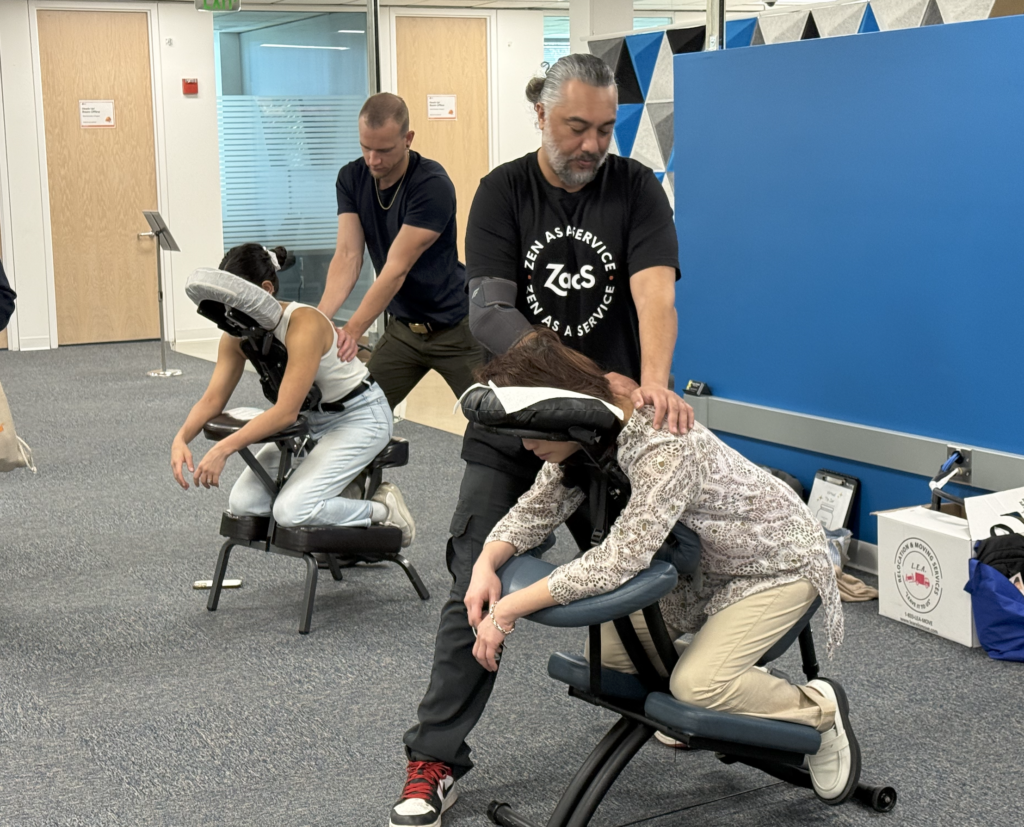
Forward-thinking organizations have begun to recognize that culture is not just an HR initiative; it is a strategic business driver. Toxic environments result in an average 30% loss in productivity. If a team of 10 people has 3 disengaged employees, you’re not just losing “3 people’s worth” of output; you’re often losing the equivalent of 4–5 people’s productivity once ripple effects are included.
While global employee engagement continues to drop, a strong culture can:
- improve employee engagement and productivity
- Increase innovation and creative problem-solving
- Strengthen talent attraction and retention
- Build trust across teams and leadership levels.
In competitive markets, culture often becomes a company’s most sustainable advantage because it is difficult to copy. Products can be replicated. Pricing can be matched. Technology can be rebuilt. But a deeply embedded culture takes years to develop and cannot be duplicated overnight.
The Future of Workplace Culture Is Intentional
As organizations become more distributed, digital, and fast-moving, culture will only grow in importance. Remote work, global teams, and rapid innovation cycles require stronger alignment around shared behaviors and values. Without it, organizations risk fragmentation, disengagement, and burnout. The companies that succeed in the future will not treat culture as a side conversation. They will treat it as infrastructure; something that is actively designed, measured, and reinforced.
Because ultimately, company culture answers a simple but powerful question: How do we work together to succeed? And the organizations that answer that question intentionally are the ones that build resilient, high-performing teams for the long term.
ZaaS offers strategic company wellness programs to improve employee well-being and company culture. Contact us today to book a demo.