Men’s Health Week, mid-year audits, and the employee wellness program renewal conversation you should be starting now

June is the month when most employee wellness programs quietly lose momentum. Open enrollment is a distant memory, summer schedules fragment attention, and the people who run employee wellness programs start saving their energy for Q4. But for HR teams and brokers who know where to look, June contains two of the most underused leverage points of the entire year, and they happen to reinforce each other.
The first is National Men’s Health Week (June 15-21). The second is the pre-renewal window, the four-to-six weeks before RFPs start landing in July and August. Most organizations treat these as unrelated. They aren’t. Men’s Health Week is the cleanest excuse on the calendar to start the mid-year benefits conversation with employees, with clients, and with renewal stakeholders before competitors do.
Here’s why that matters, and how to use it.
The Men’s Health Gap is a Benefits Utilization Problem

Men engage with preventive care at meaningfully lower rates than women across nearly every category: annual physicals, mental health services, dermatology, and cardiovascular screening. From an HR standpoint, that’s not just a wellness issue. It’s a benefits ROI issue. You’re paying premiums on services a large portion of your workforce isn’t using until something breaks.
We see clients put a poster in the break room or send an email blast linking to the EAP, but that never works. What moves the needle is meeting men where the friction is lowest: short, on-site, no-appointment-needed touchpoints. A 15-minute biometric screening at a Health Fair will reach more male employees than six months of nudges.
This is the operational story HR teams should tell themselves in June. It’s also the consultative story brokers should be telling clients.
HR Teams: Use Men’s Health Week to Audit, Not Announce

Most HR teams approach awareness weeks as comms exercises. The better move in June is to use Men’s Health Week as a diagnostic.
A few questions worth running through:
- What percentage of male employees completed a preventive screening in the last 12 months? If you don’t know, your wellness vendor or carrier can usually pull it (we do this for our clients).
- Of the mental health, EAP, and family-support benefits you offer, which have utilization rates under 5%? Those are the benefits you’re paying for, and nobody’s using.
- When was the last on-site touchpoint? Think Health Fair, a screening day, a mobile clinic visit. When was it easy for a male employee to walk in without scheduling anything?
If the answers are uncomfortable, Men’s Health Week is the cover you need to act. Programming a mid-June screening event, a manager toolkit on mental health conversations, or even a simple utilization audit doesn’t require executive buy-in if it’s framed against a national awareness week. It’s the rare moment where the calendar does the political work for you.
Brokers: This is Your Mid-Year Touchpoint
Brokers, you know the cadence. Renewal RFPs start surfacing in July. By August, the conversation is about price, plan design, and carrier comparisons. This is the conversation you want to avoid if you’re trying to retain an account.
The pre-renewal window, roughly mid-June through early July, is when you can still shape the frame. And Men’s Health Week is the most natural reason to be in front of a client right now, without sounding like you’re prospecting them.
The play is straightforward:
- Reach out with a Men’s Health Week angle, not a renewal angle. “We pulled some data on screening utilization in your industry and want to share it before mid-year planning starts.”
- Bring something concrete: a screening-event template, a utilization benchmark, or a vendor list for on-site Health Fairs (ZaaS can help you with this).
- Use the conversation to surface what the HR team is already worried about. The ones who tell you “engagement is flat” or “we don’t really know what people are using” are telling you exactly where to position value at renewal.
Brokers who run this play in June walk into July with a retention story already built. The ones who wait until August are negotiating on price.
Where Corporate Health & Wellness Fairs Fit
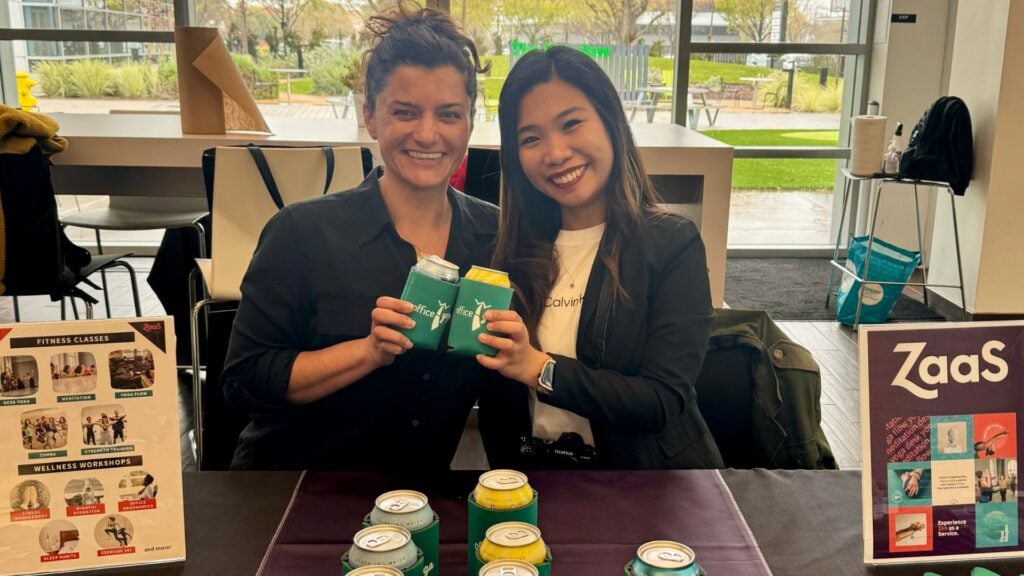
This is the part where the two themes converge. A well-run Health Fair is the single most efficient way to:
- Drive preventive screening engagement among the employees least likely to seek it on their own.
- Generate the utilization data HR teams need for mid-year reviews.
- Give brokers a tangible, repeatable value-add that doesn’t depend on renewal pricing.
It’s not the only answer; virtual options, mobile clinics, and targeted communications all play roles. But specifically in the June-to-July window, Health Fairs do disproportionate work because they compress engagement, data, and visibility into a single event.
That’s also the reason we’re hosting a live webinar on June 10 to walk through what high-impact Health Fairs actually look like in 2026, what ROI benchmarks to expect, and how brokers and HR teams can use them as a strategic tool rather than a one-off event. Whether you’re auditing your own program or advising clients on theirs, the playbook is the same.
The Bottom Line
June rewards those who don’t treat it as a slow month. Men’s Health Week gives you a legitimate, calendar-driven reason to review utilization, restart conversations, and plan something concrete. The mid-year window gives you four to six weeks of leverage before renewal pricing dominates every conversation. Used together, they turn a quiet month into the most strategically valuable stretch of your second half.
The HR teams and brokers who get this are already planning their June touchpoints. The rest will be reacting to RFPs in August.
Want the full playbook? Join our June 10 webinar on the future of workplace Health Fairs — 45 minutes, including 15 minutes of live Q&A. Save your seat.